Cervical (Neck) Conditions
Cervical spondylosis & neck pain: Age-related wear of the neck that may cause stiffness, pain, or headaches. Cervical stenosis: Narrowing of the spinal canal in the neck, which may lead to hand clumsiness, balance problems, or weakness.

Thoracic & Mid-Back Conditions
Mid-back muscle strain: Often related to poor posture, prolonged sitting, or sudden movements. Pain is usually localized and improves with rest and exercise.
Lumbar (Low Back) Conditions
Low back pain: Very common and often related to muscles, discs, or joints.
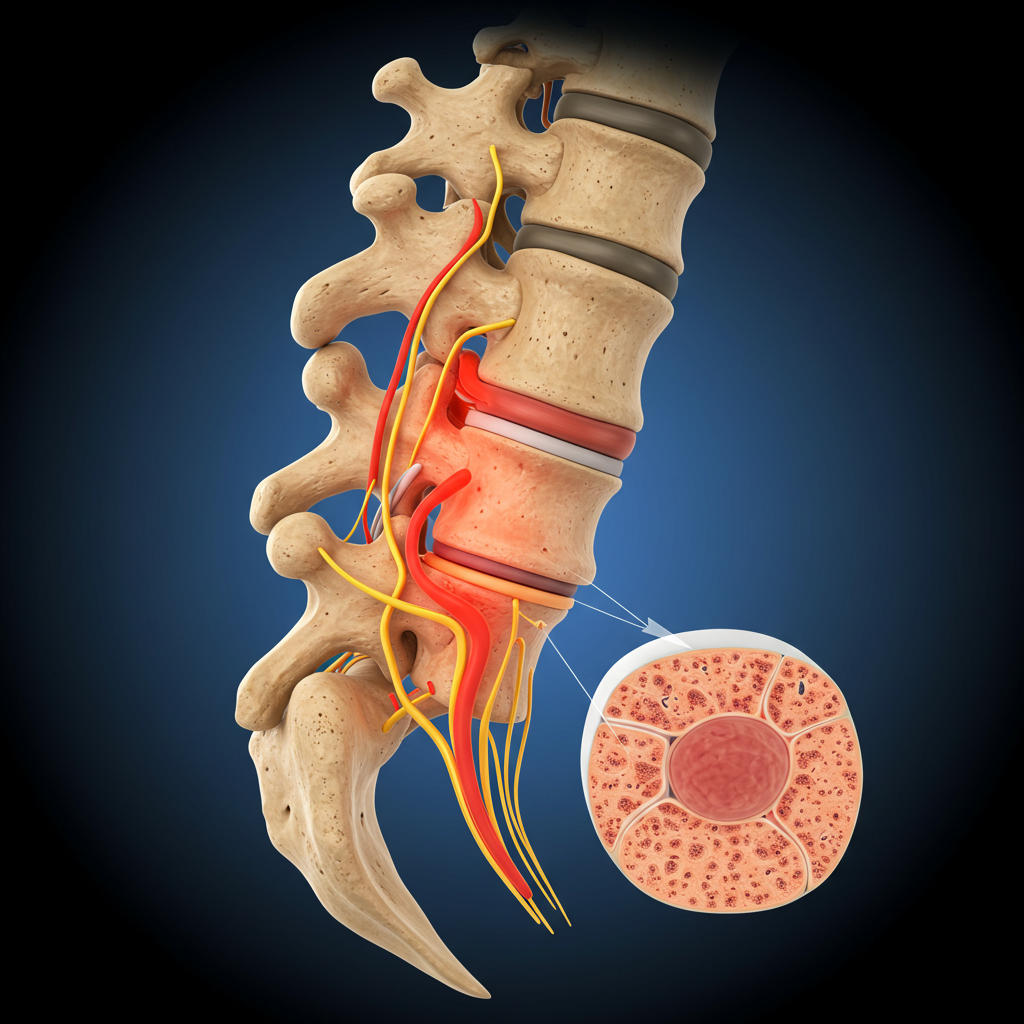
Disc herniation: A disc presses on a nerve, causing leg pain, numbness, or tingling. Sciatica: Pain radiating from the lower back down the leg.
Spinal stenosis: Narrowing of the spinal canal causing pain or numbness while walking.
Spondylolisthesis: One vertebra slips over another, leading to back pain or nerve symptoms.

Deformity & Growth-Related Conditions
Spinal deformities are conditions in which the spine has an abnormal shape or alignment. These conditions may develop during growth or appear later in adulthood due to degeneration or osteoporosis. Early recognition and regular follow-up are important.
Scoliosis: A sideways curvature of the spine that most commonly develops during adolescence but can also appear in adults. Mild scoliosis may cause no symptoms, while more significant curves can lead to back pain, fatigue, or visible asymmetry of the shoulders or hips. Treatment depends on age, curve size, and symptoms, and may include observation, bracing, or surgery in selected cases.
Kyphosis: An excessive forward rounding of the upper back, often referred to as a hunched posture. It can be related to poor posture, vertebral fractures, or developmental conditions. Symptoms may include back pain, stiffness, and reduced endurance.
The goal of treatment is to reduce pain, improve posture and function, and prevent progression of the deformity.

Trauma & Acute Conditions
Trauma and acute spinal conditions usually occur suddenly and are often related to accidents or unexpected injuries. Early evaluation is important to prevent long-term problems.
Spinal fractures: These can result from falls, traffic accidents, sports injuries, or weakened bones due to osteoporosis. Symptoms may include sudden severe pain, limited movement, or, in serious cases, neurological problems such as weakness or numbness. Prompt diagnosis and appropriate treatment are essential.
Whiplash: A common neck injury caused by rapid back-and-forth movement of the head, most often during car accidents. Patients may experience neck pain, stiffness, headaches, or dizziness. Most cases improve with conservative treatment and time.
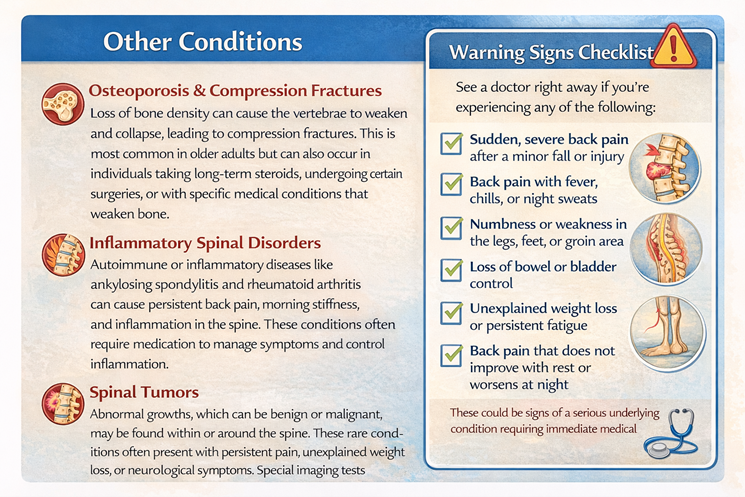
Other Conditions
This group includes less common but clinically important spinal conditions that often require careful evaluation and long-term follow-up. Early recognition of warning signs can make a significant difference in outcomes.
Osteoporosis & compression fractures: Osteoporosis weakens the bones, making the spine more vulnerable to fractures, sometimes even after minor trauma or routine activities. Vertebral compression fractures may cause sudden back pain, loss of height, or spinal deformity. Early diagnosis and treatment help reduce pain and prevent further fractures.
Inflammatory spinal disorders: These conditions cause chronic inflammation of the spine and joints. Symptoms often include persistent back pain, stiffness that is worse in the morning or after rest, and improvement with movement. Early diagnosis is important to prevent long-term stiffness and loss of mobility.
Spinal tumors: Tumors of the spine are rare and may be benign or malignant. Symptoms can include persistent pain, night pain, unexplained weight loss, or neurological problems. These conditions require specialized imaging, multidisciplinary evaluation, and individualized treatment.